



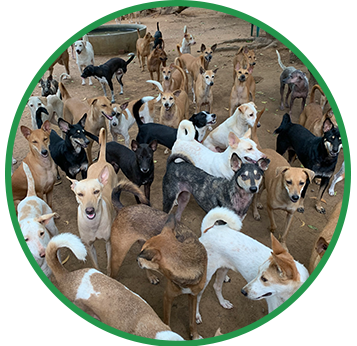
Animal shelters are places which are built on leased or own spaces in a locality a decent distance away from residential dwelling areas. They may be at a higher elevation than the normal lay of land to facilitate normal drainage, well connected by road and easy accessibility to water power and sanitary systems of the locality. All animals need to carry out normal life processes and therefore all humans and non-human animals need to have their own spaces and as such animal shelters are needed to houses stray and abandoned animals till they are found a good home by the animal welfare organization.
These animal shelters become responsible for overseeing the day-to-day operations of needs of the interned animal. This requires trained staff and volunteers to maintain facilities and equipment, interact with the public and ensure that shelter animals receive proper care. Additionally, animal shelter may also be responsible for leading fundraising efforts and fostering good community relations to the day to day functioning of an animal shelter.
The shelter has duties for overseeing employees and volunteers, such as hiring and training, evaluating performance and setting schedules. It is also responsible for delegating work tasks, addressing employee concerns and enforcing policies. Animal shelter must also perform customer service duties, such as giving facility tours, instructing customers about proper animal care, dealing with complaints and assisting with adoptions.
Animal shelter management also determines when animals require veterinary care and when they need to be put to sleep as per guidelines. They need also to follow proper procedures for carcass disposal. Other management procedures involve cleaning and maintaining kennels and facilities, balancing the budget, and monitoring inventory. The animal shelter needs to have a complete update of its paperwork, keep the organization’s records, maintain equipment and coordinate fundraising efforts.
A good state of animal welfare is achieved in animal shelters if the animal is healthy, comfortable, properly nourished, safe from harm and if it is not suffering from the effects of pain, fear, and distress. Protecting an animal’s welfare means providing for its physical and mental needs. Good animal welfare requires regular vet visits for disease prevention and healthy checkups, adequate shelter, a safe place, good nutrition, and humane handling. Animal welfare doesn’t just apply to pets or companion animals, but to all animals that are used for humans, including for working purposes and consumption.
The foundation of Buddhism and Jainism is ‘Ahimsa’ or ‘non-violence’, not only towards fellow humans and animals, but also to every living creature including an insect. With such rich culture and heritage, where kindness and compassion are the foundation of society, there appears to be no need for animal welfare organizations in India, as each home is an animal welfare institution by itself for every home has cattle in the back yard, the bullocks work in the fields alongside the farmer, the cows and buffaloes provide milk to the family, but only after the calves have had their fill. Dogs and cats live inside our homes as members of the family. Thus it was a beautiful picture of co-existence of animals and humans.
But these days, what with the population explosion, rapid urbanisation and consumerism catching up, animals are easy prey for human greed. Chicken are kept in cramped batteries, either for the eggs or for slaughter. Animals for slaughter are made to walk miles to slaughterhouses, or carted in trucks / tempos packed like sardines, with the result some of them die of suffocation before they reach their destination. Same is the case with thousands of animals performing in circuses. Research on animals is another major issue that needs to be tackled.
In this situation, animal welfare in India takes on a whole new meaning. With so many animal issues and so many animals on the streets, the need of the day is to have several animal welfare societies in each community, whereas there are just one or two full-fledged veterinary hospitals in some of our cities which is not at all sufficient to look after all the sick and injured animals. Non-Government Organisations (NGO) running the Animal Birth Control (ABC) centres also treat the sick, injured animals or house the abandon animals with very meager means and facilities.